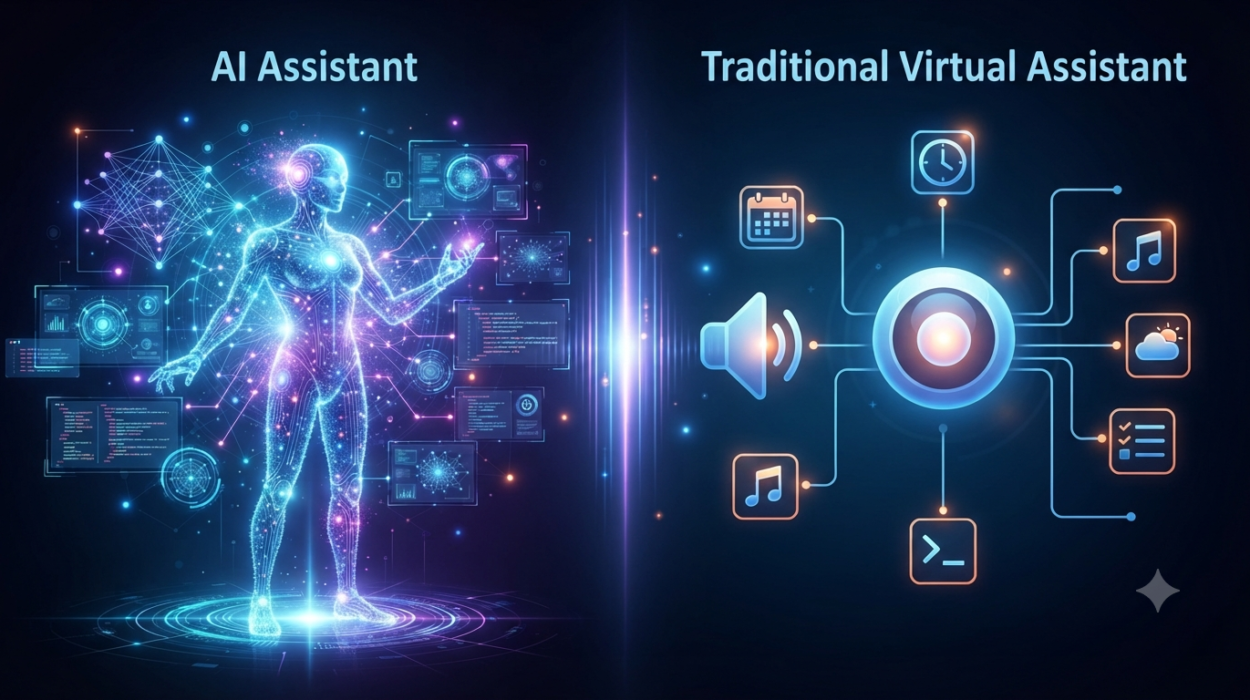
Artificial intelligence has changed dramatically in just a few years. Tasks that once required hours of research, writing, coding, or brainstorming can now be completed in minutes with the help of AI assistants. Among the many AI chatbots available today, two names stand out as leaders in the field: ChatGPT and Claude.
Both are powerful conversational AI systems capable of answering questions, writing articles, generating code, explaining complex ideas, summarizing documents, brainstorming creative content, and helping people with everyday tasks. At first glance, they may seem very similar. You type a question, and both generate detailed, human-like responses.
However, beneath the surface, they are built by different companies, trained using different methods, and designed with somewhat different priorities. As a result, each has its own strengths, limitations, and ideal use cases.
The question is not simply which AI is “better.” A more useful question is which one is better for a particular task.
Understanding the similarities and differences between ChatGPT and Claude can help users choose the right tool while also developing a clearer understanding of today’s rapidly evolving AI technology.
What Is ChatGPT?
ChatGPT is a conversational AI developed by OpenAI. It was first released to the public in November 2022 and quickly became one of the fastest-growing consumer applications in history.
The system is based on a family of large language models known as GPT, short for Generative Pre-trained Transformer.
ChatGPT is designed to understand written prompts and generate natural-language responses. It can answer questions, assist with programming, explain scientific concepts, write stories, translate languages, summarize documents, analyze information, and support many other tasks.
Over time, ChatGPT has expanded beyond simple text generation. Modern versions can also work with images, analyze files, browse the web in supported configurations, and interact with various software tools depending on the version being used.
Millions of students, educators, researchers, businesses, and creative professionals now use ChatGPT as part of their daily workflows.
What Is Claude?
Claude is a conversational AI developed by Anthropic, an AI research company founded in 2021 by former OpenAI researchers and other experts in artificial intelligence.
Like ChatGPT, Claude is a large language model designed to understand and generate human language.
Claude can answer questions, summarize long documents, write articles, assist with coding, explain academic subjects, analyze uploaded files, and help with many forms of knowledge work.
Anthropic places strong emphasis on developing AI systems that are reliable, helpful, and aligned with human intentions. One of the company’s notable research approaches is known as Constitutional AI, a method intended to help AI models produce responses that better follow predefined principles while reducing harmful or misleading outputs.
Today, Claude is widely used by businesses, researchers, writers, and professionals who work with large amounts of text.
How Large Language Models Work
Both ChatGPT and Claude belong to a category of artificial intelligence known as large language models, often abbreviated as LLMs.
These systems are trained using enormous collections of text from diverse sources.
Rather than memorizing answers like a traditional database, they learn statistical relationships among words, phrases, and concepts.
When a user enters a prompt, the model predicts which words are most likely to come next while taking into account the surrounding context.
This prediction process happens extremely quickly, producing responses that often appear thoughtful and conversational.
Although their outputs may resemble human reasoning, neither ChatGPT nor Claude possesses consciousness, emotions, beliefs, or personal understanding.
Instead, they generate responses through advanced mathematical computations performed by neural networks.
Similarities Between ChatGPT and Claude
For most everyday users, ChatGPT and Claude share many capabilities.
Both can explain difficult topics in simple language.
Both assist with writing and editing.
Both generate computer code.
Both summarize lengthy documents.
Both help brainstorm ideas.
Both answer factual questions across many academic subjects.
Both support multiple languages.
Both can adapt their writing style for different audiences.
Whether someone is preparing for an exam, writing a business report, drafting an email, creating marketing content, or learning a new programming language, either AI assistant can often provide useful support.
These similarities exist because both systems rely on modern deep learning techniques and transformer-based language model architectures.
Differences in Writing Style
Although both chatbots generate fluent text, experienced users often notice differences in writing style.
ChatGPT generally produces responses that are conversational, flexible, and adaptable.
It often adjusts well to different tones, whether formal, technical, friendly, educational, or creative.
Claude is frequently described as producing thoughtful, carefully structured responses with strong attention to clarity and nuance.
Many users find Claude especially effective when discussing complex ethical topics, analyzing lengthy documents, or producing carefully reasoned explanations.
However, writing style can vary depending on the model version, user instructions, and specific task.
Neither style is objectively superior.
Different users simply prefer different approaches.
Accuracy and Reliability
One of the most important questions surrounding any AI system is accuracy.
Both ChatGPT and Claude are capable of producing remarkably useful information.
However, both can also make mistakes.
Large language models sometimes generate incorrect facts, misunderstand questions, perform faulty reasoning, or produce information that sounds convincing despite being inaccurate. AI researchers often refer to these confident but incorrect outputs as hallucinations.
Neither ChatGPT nor Claude should be treated as an infallible source of truth.
For important decisions involving medicine, law, finance, engineering, scientific research, or public safety, information should always be verified using reliable primary sources and expert guidance.
Developers of both systems continue working to reduce errors and improve factual reliability.
Coding Capabilities
Software developers frequently compare ChatGPT and Claude because both are capable programming assistants.
Both can explain algorithms, debug code, generate functions, review software, convert programs between programming languages, and assist with learning computer science.
Many programmers use AI to speed up repetitive tasks while still reviewing every generated solution carefully.
Performance varies depending on the programming language, project complexity, prompt quality, and model version.
As AI models continue improving, coding assistance remains one of their fastest-growing applications.
Creative Writing
Creative writing highlights another interesting comparison.
Both ChatGPT and Claude can produce stories, poems, scripts, dialogue, fictional worlds, and character descriptions.
ChatGPT is often praised for its versatility and ability to imitate many different writing styles while responding well to creative prompts.
Claude is frequently appreciated for producing coherent narratives with thoughtful pacing and carefully developed arguments.
Ultimately, creativity depends not only on the AI but also on the quality of the user’s instructions.
Well-designed prompts generally produce better writing regardless of which chatbot is used.
Long Documents
Modern AI systems increasingly help users work with large documents.
Researchers summarize scientific papers.
Lawyers review contracts.
Businesses analyze reports.
Students organize lecture notes.
Both ChatGPT and Claude support document analysis, although the amount of information they can process at one time depends on the specific model and platform configuration.
Over recent years, developers have steadily expanded the context windows of large language models, allowing them to analyze increasingly lengthy conversations and documents.
Learning and Education
Students around the world use AI to support learning.
ChatGPT and Claude can explain mathematics, physics, biology, chemistry, history, literature, economics, programming, and many other subjects.
They can simplify difficult concepts, generate practice questions, summarize textbooks, and provide alternative explanations when students become confused.
However, educators generally emphasize that AI should supplement learning rather than replace it.
Real understanding develops through study, practice, critical thinking, discussion, and independent problem-solving.
AI works best as an educational assistant rather than a substitute for genuine learning.
Business Applications
Businesses increasingly integrate AI into everyday operations.
Customer support teams use conversational AI.
Marketing departments generate content.
Human resources staff draft documents.
Financial analysts summarize reports.
Researchers organize information.
Both ChatGPT and Claude are used across many industries to improve productivity.
Organizations often evaluate factors such as security, privacy, integration options, pricing, reliability, and available features before selecting an AI platform.
The best choice depends on the organization’s specific needs rather than on a single universal ranking.
Safety and Responsible AI
Artificial intelligence can produce enormous benefits, but it also presents challenges.
Both OpenAI and Anthropic invest heavily in AI safety research.
Developers attempt to reduce harmful outputs, improve factual accuracy, discourage illegal activities, and encourage responsible use.
Despite these efforts, no AI system is perfect.
Users should remain aware that AI-generated information may contain mistakes, biases, or incomplete explanations.
Responsible AI use involves human oversight, careful verification, and thoughtful judgment.
Privacy Considerations
Privacy is an important consideration when using any AI chatbot.
Organizations often avoid entering confidential business information, sensitive personal data, proprietary research, or legally protected material into AI systems unless they fully understand the platform’s privacy policies and available security features.
Both OpenAI and Anthropic provide documentation describing how their services handle user data, although policies may differ across products and account types.
Users should review the relevant terms and settings before sharing sensitive information.
Speed and User Experience
Performance depends on many factors, including internet connectivity, server demand, subscription level, and model version.
Both ChatGPT and Claude generally produce responses within seconds.
Their interfaces are designed to support natural conversations, allowing users to ask follow-up questions, request revisions, or refine earlier responses.
As new versions are released, speed, reasoning ability, and usability continue to improve.
Scientific Research and Knowledge Work
Researchers increasingly employ AI as a productivity tool.
Large language models can summarize published literature, organize notes, draft reports, explain technical terminology, and assist with brainstorming research ideas.
However, AI should not replace careful reading of original scientific papers.
Researchers remain responsible for verifying citations, interpreting evidence accurately, and evaluating methodological quality.
Scientific progress depends on rigorous evidence rather than AI-generated summaries alone.
Can Either AI Replace Human Intelligence?
Despite impressive capabilities, neither ChatGPT nor Claude thinks like a human.
Neither possesses consciousness.
Neither has emotions.
Neither forms personal beliefs.
Neither understands the world through lived experience.
Instead, both generate responses by recognizing statistical patterns learned during training.
Human intelligence remains fundamentally different.
People combine reasoning with creativity, empathy, moral judgment, physical experience, and social understanding.
AI excels at processing information rapidly, but human judgment remains essential for important decisions.
Which One Is Better?
The answer depends on what the user hopes to accomplish.
Someone focused on creative brainstorming may prefer one system’s style.
Another person working with technical documents may favor the other.
Software developers sometimes compare coding performance before choosing a preferred assistant.
Writers often experiment with both before deciding which better matches their workflow.
Because both ChatGPT and Claude continue evolving rapidly, today’s comparison may change as future models introduce new capabilities.
Rather than asking which chatbot wins overall, it is often more useful to ask which one better fits a particular task.
The Future of AI Assistants
Artificial intelligence is advancing at an extraordinary pace.
Future AI assistants are expected to become more capable of reasoning, handling longer conversations, understanding multiple forms of information such as text, images, audio, and video, and collaborating more effectively with people.
Researchers are also working to improve factual accuracy, transparency, efficiency, and safety.
Competition among leading AI developers encourages rapid innovation, benefiting users through continual improvements.
At the same time, scientists, governments, educators, and industry leaders continue discussing important questions about privacy, regulation, ethics, employment, copyright, and the responsible development of increasingly powerful AI systems.
ChatGPT and Claude Are Shaping the Next Era of Computing
ChatGPT and Claude represent two of the most advanced conversational AI systems available today. Although they were created by different companies and reflect different design philosophies, they share a common goal: helping people solve problems, communicate more effectively, learn new skills, and work more efficiently.
Neither system is perfect. Both have strengths, limitations, and areas where they continue to improve. Both occasionally produce mistakes and require human oversight, especially in situations involving important decisions or specialized expertise.
As Artificial Intelligence continues to evolve, the relationship between humans and AI is likely to become increasingly collaborative rather than competitive. ChatGPT and Claude are not replacing human intelligence; they are extending it by providing powerful tools that help people explore ideas, organize knowledge, write more effectively, analyze information, and tackle complex challenges. The future of AI will depend not only on technological advances but also on how thoughtfully and responsibly people choose to use these remarkable systems.