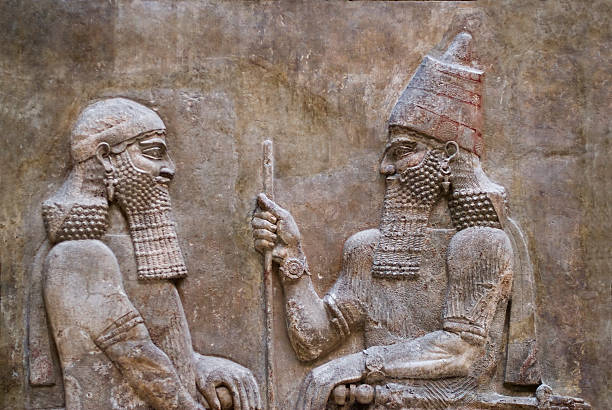
Imagine standing on a wide, sunlit plain more than 5,000 years ago. Before you stretches a bustling city unlike anything the world had seen before. Farmers return from fertile fields carrying grain harvested from carefully irrigated land. Merchants fill crowded marketplaces with pottery, textiles, precious metals, and exotic goods brought from distant lands. Priests climb towering temples that dominate the skyline, while scribes carefully press wedge-shaped symbols into wet clay tablets, recording business transactions, laws, stories, and prayers.
This was Mesopotamia—the land where many of humanity’s greatest achievements first took shape.
Long before the rise of ancient Greece or Rome, before the pyramids of Egypt reached their greatest glory, Mesopotamia became home to some of the world’s earliest cities, governments, writing systems, legal codes, schools, libraries, and organized economies. It was here that people transformed scattered farming villages into thriving urban civilizations, forever changing the course of human history.
Historians often call Mesopotamia the “Cradle of Civilization.” The title is not simply poetic. It reflects the extraordinary influence this region had on nearly every aspect of organized human society. Many ideas that seem ordinary today—written records, taxation, formal laws, large-scale irrigation, mathematics, astronomy, and urban planning—either began or developed significantly in Mesopotamia.
Yet Mesopotamia was not a single kingdom or empire. Over thousands of years, different peoples settled this fertile land. The Sumerians, Akkadians, Babylonians, Assyrians, and others built powerful cities, fought fierce wars, traded across continents, and left behind a rich cultural legacy that still influences the modern world.
Although their magnificent cities eventually fell into ruin, their ideas survived. Every time we divide an hour into sixty minutes, use written contracts, study astronomy, or live in organized cities, we are benefiting from innovations whose roots reach back to ancient Mesopotamia.
Understanding Mesopotamia means understanding one of humanity’s greatest turning points—the moment when civilization itself began to flourish.
What Was Mesopotamia?
The word “Mesopotamia” comes from ancient Greek and means “the land between rivers.”
The name refers to the fertile region located between the Tigris and Euphrates rivers in what is now primarily Iraq, along with parts of Syria, Turkey, Iran, and Kuwait.
For thousands of years, these rivers shaped life in the region.
Each year, seasonal flooding deposited rich layers of fertile soil across the surrounding plains. This fertile land allowed farmers to grow abundant crops, supporting larger populations than many neighboring regions.
Unlike mountainous or forested landscapes, Mesopotamia’s broad plains encouraged farming, trade, communication, and the growth of cities.
Because food became more plentiful, not everyone needed to work as farmers. Some people became builders, merchants, metalworkers, priests, soldiers, artists, and scribes.
This division of labor laid the foundation for increasingly complex societies.
Why Mesopotamia Is Called the Cradle of Civilization
The phrase “Cradle of Civilization” reflects Mesopotamia’s remarkable role in human development.
Civilization involves much more than simply living together.
It includes permanent settlements, organized governments, written language, specialized occupations, social institutions, large-scale construction, trade networks, and systems of law.
Many of these features appeared for the first time or developed rapidly in Mesopotamia.
Here, villages expanded into cities.
Simple farming communities evolved into organized states.
Kings ruled growing populations.
Temples became religious and economic centers.
Writing preserved knowledge.
Mathematics improved trade and engineering.
Legal systems established social order.
These innovations spread to neighboring civilizations, influencing cultures across the ancient world.
The Geography That Made Civilization Possible
Geography played an essential role in Mesopotamia’s success.
The Tigris and Euphrates rivers supplied water in an otherwise dry environment.
Although floods could sometimes be destructive, they also replenished farmland with nutrient-rich sediments.
Early farmers learned to control water through irrigation.
They dug canals, built dikes, and constructed reservoirs that carried water to distant fields.
These engineering projects allowed agriculture to flourish even during dry seasons.
Successful farming produced food surpluses.
Food surpluses supported larger populations.
Larger populations encouraged specialization.
Specialization encouraged innovation.
Innovation strengthened civilization.
This chain of development began with the fertile river valleys.
The First Farmers
Before cities existed, Mesopotamia was home to farming villages.
Around 10,000 years ago, people gradually shifted from hunting and gathering toward agriculture.
Instead of constantly moving in search of food, they settled permanently.
They cultivated wheat and barley.
They domesticated sheep, goats, cattle, and pigs.
Permanent settlements allowed families to store food and build stronger homes.
Over generations, villages expanded.
Population increased.
Communities became more organized.
These early agricultural societies formed the foundation upon which civilization would later emerge.
The Rise of the Sumerians
The first great civilization in Mesopotamia was created by the Sumerians.
Around 3500 BCE, they established some of the world’s earliest cities in southern Mesopotamia.
Cities such as Ur, Uruk, Eridu, Lagash, and Nippur became centers of politics, religion, trade, and culture.
Each city functioned as an independent city-state.
Rather than belonging to one united kingdom, every city possessed its own ruler, temples, military forces, and governing institutions.
Competition sometimes led to warfare.
At other times, cities traded peacefully and exchanged ideas.
The Sumerians developed many innovations that later civilizations adopted.
The Birth of Cities
One of Mesopotamia’s greatest achievements was urbanization.
Cities represented a completely new way of organizing society.
Thousands of people lived together within protective walls.
Markets connected buyers and sellers.
Craftspeople specialized in pottery, weaving, metalworking, and construction.
Religious ceremonies brought communities together.
Government officials managed public works.
Large populations required planning.
Roads connected neighborhoods.
Storage buildings protected grain supplies.
Public spaces hosted ceremonies and trade.
Cities became engines of economic growth and cultural development.
The Invention of Writing
Perhaps no Mesopotamian achievement influenced history more than writing.
Around 3200 BCE, Sumerian scribes developed cuneiform.
Instead of using alphabetic letters, they pressed wedge-shaped marks into soft clay tablets using reed styluses.
Initially, writing served practical purposes.
Merchants recorded trade.
Officials tracked taxes.
Temples documented food supplies.
Over time, writing expanded dramatically.
Stories, religious texts, mathematics, astronomy, laws, poetry, medicine, and royal histories all appeared on clay tablets.
Writing allowed knowledge to survive beyond individual lifetimes.
Ideas could now travel across generations.
Civilization had entered a new era.
Schools and Scribes
Learning to write cuneiform required years of education.
Students attended schools where experienced scribes taught reading, writing, mathematics, and administration.
Lessons involved copying signs repeatedly onto clay tablets.
Discipline was often strict.
Many surviving tablets contain exercises completed by students thousands of years ago.
Scribes became highly respected members of society.
Because relatively few people could write, their skills were extremely valuable.
Governments, temples, merchants, and kings all depended upon their expertise.
Mesopotamian Government
As cities expanded, governments became increasingly organized.
Kings ruled city-states and later larger kingdoms.
They supervised construction projects.
They commanded armies.
They enforced laws.
They managed irrigation systems.
Government officials collected taxes and distributed resources.
Religion and politics were closely connected.
Kings often claimed divine support for their authority.
Temples controlled significant wealth and agricultural land.
Priests played important roles in administration as well as religious life.
Religion in Everyday Life
Religion influenced nearly every aspect of Mesopotamian society.
People believed many gods governed different parts of nature.
The sky, rivers, storms, agriculture, love, wisdom, and warfare each had associated deities.
Temples stood at the center of every city.
Priests performed ceremonies, offered sacrifices, interpreted omens, and cared for sacred objects.
People believed maintaining good relationships with the gods helped ensure successful harvests, political stability, and protection from disasters.
Although modern religious beliefs differ greatly, religion provided an important framework for understanding the world.
Magnificent Ziggurats
One of the most recognizable structures in Mesopotamia was the ziggurat.
A ziggurat was a massive stepped temple built from mud bricks.
These towering structures dominated city skylines.
Unlike Egyptian pyramids, which primarily served as royal tombs, ziggurats functioned as religious centers.
Temples at their summits were believed to bring priests closer to the gods.
Constructing these enormous buildings required remarkable engineering.
Workers manufactured millions of mud bricks.
Ramps carried materials upward.
Entire communities participated in construction.
Many ziggurats remained important religious landmarks for centuries.
Daily Life in Mesopotamia
Daily life varied greatly depending on social status.
Farmers worked long hours cultivating grain and caring for livestock.
Merchants traveled between cities trading valuable goods.
Craftspeople produced pottery, textiles, jewelry, and metal tools.
Children learned practical skills from their families.
Women participated in household management, weaving, business, and sometimes religious activities.
Cities bustled with activity.
Markets sold food, clothing, pottery, livestock, and imported goods.
Festivals brought music, dancing, and religious celebrations.
Life could be challenging, but communities created rich and vibrant cultures.
Agriculture and Irrigation
Agriculture formed the economic foundation of Mesopotamia.
Without successful farming, cities could not survive.
Farmers planted barley, wheat, dates, onions, garlic, beans, and various fruits.
Irrigation canals carried river water into fields.
Maintaining these canals required continuous labor.
Communities worked together to repair embankments and remove accumulated sediment.
Effective water management allowed multiple harvests and supported growing populations.
Agricultural success made every other aspect of civilization possible.
Trade Across the Ancient World
Mesopotamia lacked certain important natural resources.
Stone, timber, and many metals were scarce.
To obtain these materials, merchants developed extensive trade networks.
Ships traveled rivers and coastal waters.
Caravans crossed deserts and mountains.
Mesopotamian merchants exchanged grain, textiles, pottery, and crafted goods for copper, tin, cedar wood, precious stones, gold, and silver.
Trade connected distant civilizations and encouraged cultural exchange.
Ideas traveled alongside goods.
Mathematics and Numbers
Mesopotamian mathematics was remarkably advanced.
Instead of using a base-ten system like most modern mathematics, they often used base sixty.
This ancient system survives today.
An hour contains sixty minutes.
A minute contains sixty seconds.
A circle contains 360 degrees.
These familiar divisions originated in Mesopotamian mathematical traditions.
Mathematics supported construction, land measurement, taxation, astronomy, and commerce.
Clay tablets reveal surprisingly sophisticated calculations.
Astronomy
The night sky fascinated Mesopotamian scholars.
Priests and astronomers carefully observed the movements of stars, planets, and the Moon.
These observations helped create calendars.
Predicting seasonal changes improved agriculture.
Astronomical records accumulated over centuries, becoming increasingly accurate.
Although ancient astronomy often blended scientific observation with religious interpretation, careful recording laid foundations for later scientific advances.
Medicine in Ancient Mesopotamia
Mesopotamian medicine combined practical treatments with spiritual beliefs.
Physicians treated wounds, broken bones, infections, and illnesses using herbs, bandages, and various remedies.
At the same time, many illnesses were believed to involve supernatural causes.
Priests sometimes performed rituals alongside medical treatments.
Although limited by modern standards, Mesopotamian medicine represented an important step toward organized healthcare.
Medical texts recorded symptoms, diagnoses, and treatments for future generations.
Law and Justice
One of Mesopotamia’s most famous contributions is written law.
The best-known example is the Code of Hammurabi.
Created around 1754 BCE, it established hundreds of laws governing trade, property, family life, wages, agriculture, crime, and justice.
Although some punishments appear harsh today, the code represented a major development.
Laws became publicly known rather than depending entirely on individual rulers.
Citizens gained clearer expectations regarding acceptable behavior.
Legal systems became more consistent.
The concept that governments should establish written laws continues influencing societies worldwide.
The Epic of Gilgamesh
Among the world’s oldest surviving literary works is the Epic of Gilgamesh.
This remarkable story follows King Gilgamesh as he seeks wisdom, friendship, and ultimately immortality.
The epic explores timeless human questions.
Why do people die?
What gives life meaning?
How should power be used?
What makes true friendship valuable?
Despite being thousands of years old, these themes remain deeply relatable.
The story demonstrates that ancient people experienced hopes, fears, love, grief, and curiosity much like we do today.
The Akkadian Empire
Around 2334 BCE, Sargon of Akkad created one of history’s earliest empires.
Instead of ruling only one city, he united much of Mesopotamia under centralized authority.
The Akkadian Empire expanded trade, strengthened administration, and encouraged cultural exchange.
Although it eventually declined, its success demonstrated that large territorial empires were possible.
Future rulers built upon this example.
Babylon and Hammurabi
Babylon became one of Mesopotamia’s greatest cities.
Its most famous ruler, Hammurabi, transformed a regional kingdom into a powerful state.
Beyond military success, Hammurabi is remembered primarily for his legal code.
Babylon also became an important center of scholarship, trade, mathematics, astronomy, and literature.
For centuries, it symbolized wealth and learning throughout the ancient Near East.
The Powerful Assyrians
Northern Mesopotamia later became home to the Assyrian Empire.
The Assyrians developed one of the ancient world’s strongest militaries.
They built magnificent cities including Nineveh.
Kings sponsored impressive palaces decorated with detailed stone carvings.
Assyrian libraries preserved thousands of clay tablets.
Many important Mesopotamian texts survive today because Assyrian scholars collected and protected them.
Art and Architecture
Mesopotamian artists produced beautiful sculptures, cylinder seals, jewelry, pottery, and relief carvings.
Their artwork often depicted kings, gods, animals, battles, hunting scenes, and religious ceremonies.
Architecture emphasized monumental public buildings.
Palaces displayed royal authority.
Temples reflected religious devotion.
City walls provided security.
Although many structures were built from mud brick rather than stone, their scale impressed visitors for centuries.
Why Mesopotamia Declined
No civilization lasts forever.
Over thousands of years, Mesopotamia experienced repeated invasions, political struggles, environmental challenges, and shifting trade routes.
Different empires rose and fell.
Agricultural productivity declined in some regions because irrigation sometimes caused salt to accumulate in the soil.
Power gradually shifted toward neighboring civilizations.
Eventually, Mesopotamia lost its political dominance.
Yet its cultural influence endured long after its cities declined.
Mesopotamia’s Lasting Legacy
The true importance of Mesopotamia lies not only in its ancient cities but also in its enduring influence.
Writing transformed communication.
Law shaped government.
Mathematics improved science.
Astronomy advanced knowledge of the heavens.
Urban planning influenced later civilizations.
Agriculture supported growing populations.
Education preserved knowledge.
Trade connected cultures.
Literature explored universal human experiences.
These achievements spread across the ancient world and eventually influenced modern civilization.
Every generation since has inherited part of Mesopotamia’s remarkable legacy.
Archaeology and Rediscovery
For centuries, Mesopotamia’s great cities disappeared beneath layers of sand and soil.
Many people doubted that the magnificent places described in ancient texts had ever existed.
Beginning in the nineteenth century, archaeologists uncovered astonishing discoveries.
Excavations revealed temples, palaces, libraries, sculptures, and countless clay tablets.
These findings transformed our understanding of ancient history.
Thousands of tablets continue to be translated today.
Each new discovery adds another piece to humanity’s earliest story.
Why Mesopotamia Still Fascinates Us
Mesopotamia reminds us how quickly human creativity can transform the world.
Within only a few thousand years, farming villages became thriving cities filled with monumental architecture, organized governments, written records, scientific observation, and artistic expression.
Its people faced challenges familiar to modern societies.
They worried about food, security, justice, leadership, family, and the future.
They celebrated achievements, mourned losses, and searched for meaning.
Although separated from us by thousands of years, their humanity remains unmistakable.
Studying Mesopotamia is not simply learning about ancient ruins.
It is discovering the beginnings of many ideas that continue shaping our lives today.
Conclusion
Mesopotamia truly deserves its title as the Cradle of Civilization. Nestled between the Tigris and Euphrates rivers, this extraordinary region witnessed the birth of cities, governments, writing, organized law, mathematics, astronomy, large-scale agriculture, and countless innovations that transformed human history. From the pioneering Sumerians to the mighty Babylonians and Assyrians, generation after generation built upon the achievements of those who came before, creating civilizations whose influence spread far beyond their own borders.
The people of Mesopotamia were more than ancient builders or forgotten rulers. They were farmers who learned to control rivers, merchants who connected distant lands, scribes who preserved knowledge, architects who raised towering temples, poets who explored the meaning of life, and scholars who carefully observed the stars. Their ideas became the foundation upon which later civilizations continued to build.
Although the great cities of Ur, Uruk, Babylon, and Nineveh eventually declined, the legacy of Mesopotamia never disappeared. Every written contract, every legal system, every classroom, every city, and even the way we measure time reflects innovations that began thousands of years ago in this remarkable land between two rivers.
Today, archaeologists continue uncovering new discoveries beneath the ancient soil of Mesopotamia, reminding us that humanity’s earliest chapters are still being written. The story of Mesopotamia is ultimately the story of civilization itself—a story of curiosity, cooperation, creativity, resilience, and the remarkable ability of human beings to shape the world around them. It remains one of history’s greatest achievements and one of the most inspiring chapters in our shared human journey.